
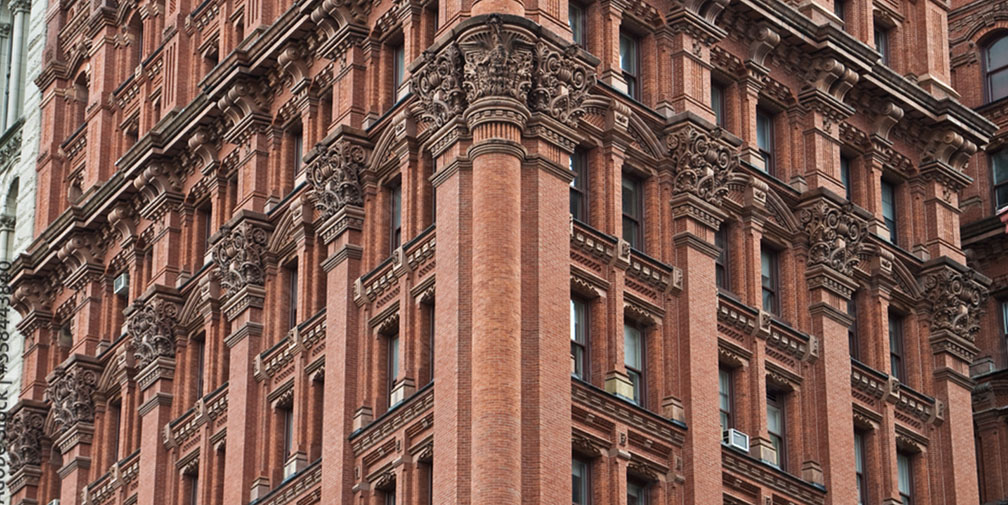
SoHo NYC Cast-Iron Historic District
The SoHo–Cast Iron Historic District is contained within the zoned SoHo NYC neighborhood.
Originally ending in the west at the eastern side of West Broadway and to the east at the western side of Crosby Street, the SoHo–Cast Iron Historic District was expanded in 2010 to cover most of West Broadway and to extend east to Lafayette and Centre Streets. The boundary lines are not straight, and some block-fronts on West Broadway and Lafayette are excluded from the District.
The Cast-Iron Buildings of SoHo NYC are perhaps the most iconic feature of the district, and they play a significant role in shaping the neighborhood’s unique character. These buildings were constructed primarily in the late 19th century, during a period of rapid industrialization in New York City.
The district became a center for manufacturing and warehousing, leading to the construction of large, open-plan buildings that could accommodate the needs of the growing businesses in the area.
Margaret McCoy Gayle played a significant role in revitalizing the SoHo NYC neighborhood in New York City. She was a community activist and preservationist who helped to save many historic buildings from demolition, including the iconic SoHo-Cast Iron District.
Margot Gayle founded the Friends of Cast-Iron Architecture and put her efforts behind the designation of the iconic SoHo-Cast Iron District.
Her efforts helped to transform SoHo NYC into a vibrant and thriving cultural hub with a mix of art galleries, boutiques, restaurants, and residential spaces.
One of the most notable examples of a cast-iron building in SoHo NYC is the Haughwout Building, located at the corner of Broadway and Broome Street. Designed by architect John P. Gaynor and completed in 1857, the Haughwout Building is a stunning example of cast-iron architecture, with elaborate facades that feature intricate details and decorative elements.
The building was originally home to the Haughwout & Co. department store, which was known for its fine china and glassware.
Today, the building is a designated New York City landmark and continues to attract attention for its historic significance and architectural beauty. It is also the location of the first elevator made for human use.
SoHo NYC boasts a wealth of other cast-iron structures including “The King of Greene Street,” 72-76 Greene Street and “The Queen of Greene Street,” 28-30 Greene Street that contribute to the district’s architectural charm.
From the Mercer Building to the Scholastic Building, each building in SoHo NYC tells a story of the area’s industrial past and its transformation into a vibrant and creative neighborhood.
These buildings serve as a reminder of SoHo’s NYC rich history and architectural legacy, attracting visitors from near and far to admire their beauty and significance in the fabric of New York City.
"Saving SoHo NYC":
The Defeat of the "Lomex Highway"
The defeat of the Lower Manhattan Expressway (Lomex) in SoHo NYC marked a major victory for community activists and preservationists in the 1960s. The proposed highway would have demolished large sections of the historic neighborhood, but grassroots opposition successfully halted the project, preserving the character and charm of SoHo NYC for future generations.